
Hvac Blower Motor Speed Calculator - Pulley Rpm
Calculate HVAC blower RPM from motor speed and pulley diameters. Check belt-drive speed ratios and estimate blower RPM for HVAC setup and service.
Please complete this field to continue.
Please complete this field to continue.
Please complete this field to continue.
Please complete this field to continue.
Please complete this field to continue.
Please complete this field to continue.
Results
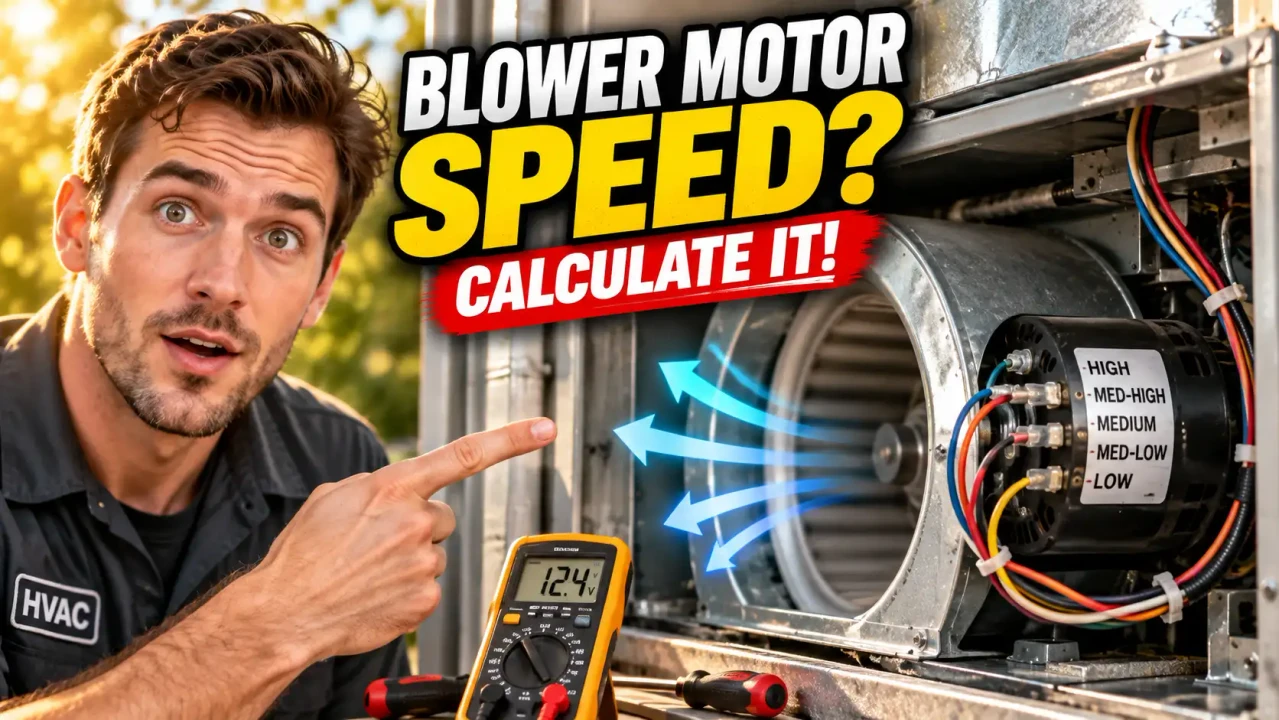
Hvac Blower Motor Speed Calculator
Quick answer: The Hvac Blower Motor Speed Calculator estimates blower RPM from motor speed and pulley diameters for belt-drive HVAC checks and setup.
The Hvac Blower Motor Speed Calculator is an HVAC engineering utility for estimating the rotational speed of a belt-driven blower from the motor speed and the relative diameters of the driving and driven pulleys. It is useful when checking a blower setup, reviewing a sheave change, or estimating how a pulley-size change will affect the blower's rotational speed.
ToolHox identifies this calculator as an HVAC tool specifically intended to estimate blower RPM from motor speed and pulley diameters. The calculation is based on the belt-drive speed relationship between the driver and driven pulleys. :chatgpt-content-reference{index="0"}
How to Use Hvac Blower Motor Speed Calculator?
- Enter motor speed: Provide the motor's rotational speed in RPM.
- Enter pulley diameters: Provide the diameter of the motor-side driver pulley and the blower-side driven pulley using the same unit.
- Calculate: Apply the pulley-speed relationship to estimate the blower shaft RPM.
- Review the result: Compare the estimated blower speed with the equipment's required operating point and applicable manufacturer information.
What Inputs Does the Calculator Use?
The core calculation requires three mechanical quantities:
- Motor RPM: the rotational speed of the motor shaft.
- Driver pulley diameter: the effective diameter of the pulley attached to the motor.
- Driven pulley diameter: the effective diameter of the pulley attached to the blower shaft.
The pulley diameters must use the same unit system. For belt-drive calculations, effective or pitch diameter is preferable to an arbitrary outside-diameter measurement because the belt's running geometry determines the speed ratio.
Blower RPM Formula
For an ideal belt drive with negligible slip, the blower speed can be estimated with:
Blower RPM = Motor RPM × (Driver Pulley Diameter ÷ Driven Pulley Diameter)
Where:
- Motor RPM = rotational speed of the motor shaft.
- Driver Pulley Diameter = effective diameter of the motor pulley.
- Driven Pulley Diameter = effective diameter of the blower pulley.
- Blower RPM = estimated rotational speed of the blower shaft.
The same relationship can be rearranged when selecting a driven pulley:
Driven Pulley Diameter = Motor RPM × Driver Pulley Diameter ÷ Target Blower RPM
A larger driven pulley reduces blower RPM, while a smaller driven pulley increases blower RPM when motor speed and driver-pulley diameter remain unchanged.
Worked HVAC Example
Suppose an HVAC blower motor operates at 1,750 RPM. The motor has a 120 mm driver pulley, and the blower has a 180 mm driven pulley.
Blower RPM = 1,750 × (120 ÷ 180)
           = 1,750 × 0.6667
           ≈ 1,166.7 RPM
The estimated blower speed is therefore approximately 1,167 RPM, before accounting for real-world belt slip and other mechanical effects.
Motor Speed and Pulley Diameter Reference
| Motor RPM | Driver Pulley | Driven Pulley | Estimated Blower RPM |
|---|---|---|---|
| 1,750 | 100 mm | 200 mm | 875 RPM |
| 1,750 | 120 mm | 180 mm | 1,167 RPM |
| 1,750 | 150 mm | 200 mm | 1,313 RPM |
| 1,450 | 100 mm | 200 mm | 725 RPM |
| 1,450 | 150 mm | 200 mm | 1,088 RPM |
These values illustrate the pulley-ratio relationship and are calculated examples rather than recommended operating speeds for a particular HVAC unit.
Why Blower RPM Matters in HVAC
Blower speed is not an isolated variable. Fan performance changes with rotational speed, so changing a pulley can affect airflow, static pressure, and absorbed power. Greenheck's fan-selection guidance expresses the basic relationships as airflow proportional to RPM, static pressure proportional to RPM squared, and brake horsepower proportional to RPM cubed. :chatgpt-content-reference{index="1"}
For example, increasing speed by 10% corresponds to approximately 10% more airflow under the applicable fan-law assumptions, but approximately 21% more pressure and 33% more brake horsepower. That makes a pulley change more significant than simply changing the blower's RPM display.
AMCA publications likewise document fan-affinity relationships for converting fan performance between speeds and sizes, with rotational speed represented by N and impeller diameter by D. The applicability of fan-law calculations depends on the conditions and similarity requirements described by the standard. :chatgpt-content-reference{index="2"}
Technical Edge Cases and Limitations
Belt Slip
The basic pulley formula represents an ideal speed ratio. Actual belt drives can experience slip, so measured blower RPM may differ from the calculated value. For critical commissioning or troubleshooting work, verify actual shaft speed with appropriate measurement equipment rather than relying only on the theoretical ratio.
Effective Pulley Diameter
Do not automatically substitute any convenient outside-diameter measurement for the belt-drive diameter. The effective diameter depends on the belt and pulley geometry. A measurement taken at the wrong location can produce a small but meaningful RPM error.
Motor RPM Is Not Always the Nameplate Number
An induction motor's actual operating speed can differ from its nominal synchronous speed because of slip and operating conditions. Use the appropriate actual or rated motor speed for the calculation rather than assuming that every motor marked for a particular nominal speed operates at exactly that value.
RPM Does Not Equal a Complete Airflow Calculation
This calculator estimates rotational speed. It does not, by itself, establish the resulting CFM, static pressure, motor load, or system operating point. Fan performance depends on the blower, system resistance, air conditions, and operating point. AMCA guidance describes fan laws as performance-conversion methods subject to specified conditions rather than as a substitute for complete fan-system analysis. :chatgpt-content-reference{index="3"}
Speed Increases Require Additional Checks
A higher blower RPM can increase airflow, but pressure and power demand can rise faster than speed. Before increasing pulley ratio, verify the blower's permitted speed, motor capacity, fan curve, belt-drive arrangement, and equipment manufacturer's requirements.
Supported Calculation Relationship
| Quantity | Relationship | Practical Meaning |
|---|---|---|
| Blower RPM | Motor RPM × Driver Diameter ÷ Driven Diameter | Estimates driven-shaft speed |
| Speed ratio | Driver Diameter ÷ Driven Diameter | Shows speed increase or reduction |
| Driven pulley selection | Motor RPM × Driver Diameter ÷ Target RPM | Estimates driven-pulley diameter for a target speed |
Technical Trust and Reference
Calculation scope: The calculator is a pulley-ratio RPM estimator. The calculated result should be treated as a mechanical speed estimate rather than a complete HVAC performance or equipment-sizing result.
For further technical reference, the Air Movement and Control Association International (AMCA) publishes fan-performance standards and technical material covering fan laws and performance calculations. Greenheck also provides technical fan-selection guidance describing the relationship between RPM, airflow, pressure, and brake horsepower. :chatgpt-content-reference{index="4"}
Technical Disclaimer: This calculator provides a preliminary mechanical speed estimate. Before changing an HVAC blower pulley or operating speed, verify the blower manufacturer's allowable speed, motor loading, belt-drive requirements, fan curve, system operating point, and applicable installation requirements.
Related HVAC Calculations
Blower RPM is one part of HVAC system performance. A complete adjustment may also require airflow, static-pressure, duct, motor-loading, and equipment-performance checks. ToolHox's HVAC collection includes related calculation utilities for system planning and HVAC performance analysis. :chatgpt-content-reference{index="5"}
Author: Clara Bennett
Author Description: Clara Bennett is an HVAC-focused technical writer covering heating, cooling, blower systems, zoning, and practical HVAC calculation tools.
Technical Review: Reviewed for consistency with belt-drive RPM relationships and standard fan-performance principles, with particular attention to pulley ratio, speed changes, and the distinction between a mechanical RPM estimate and complete fan-system performance analysis.